Youth Ambassador™
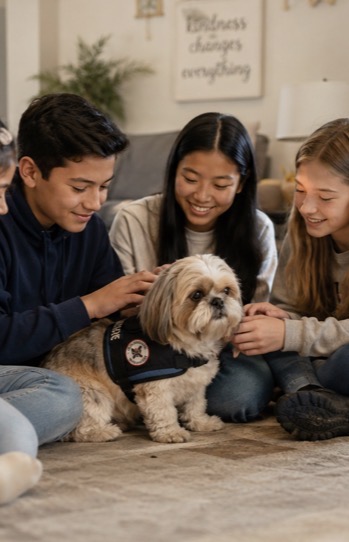
Youth animal education, leadership development, public speaking, service learning, and supervised community responsibility for young people who want to learn, help, and lead with kindness.
Develop the brain, and behavior follows.
Explore the Pathway
Everything a young ambassador needs to learn, help, and lead.
About the Pathway
A brain-first, kindness-first youth development pathway overseen by Lewis & Clark Therapy/Service Dogs™.
About the program →What They Learn
Public speaking, animal learning, meeting skills, goal setting, teamwork, and job-ready confidence.
See the curriculum →Safety & Supervision
Adult oversight, background-check policies, animal welfare, and youth privacy come first — always.
Read our safety approach →For Families & Mentors
Youth Ambassador Educational Resources
Youth Ambassadors connects youth learners, families, mentors, educators, and animal-loving communities with educational resources for leadership, animal education, communication skills, community service, public speaking practice, and future career exploration.
Alliant Academy Inc.
Education, leadership, nonprofit learning, youth development, and community programs.
Visit Alliant AcademyRuff Ruff Ranch Training Library™
Training • Development • Community. Step-by-step dog training resources.
Visit the Training LibraryLewis & Clark Therapy/Service Dogs™
Therapy dog, service dog, ESA, community education, and philanthropy pathways.
Visit Lewis & Clark Therapy/Service DogsVoices from the Program
Parents and mentors on what changes.
"My daughter came home standing a little taller. She had a whole plan for how to greet our new puppy calmly — she was teaching us."
Jennifer M.
Parent, Colorado
"The brain-first approach spoke to my scouts in a way traditional lessons hadn't. Kindness became the strategy, not the reward."
David R.
Volunteer troop leader
"Our homeschool co-op used the Youth Ambassador framework alongside our own curriculum. The public-speaking growth was remarkable."
Priya S.
Homeschool group coordinator
Names shortened to protect family privacy. Youth stories and photos are shared only with parent or guardian permission.
Contact
Contact the program
Parents, teachers, and group leaders — we'd love to hear from you. Reach out by phone, email, or Facebook, and we'll share next steps.
Interest Form
Send us a quick note.
Parents, mentors, and group leaders — share a little about your family or program and we'll follow up personally.